
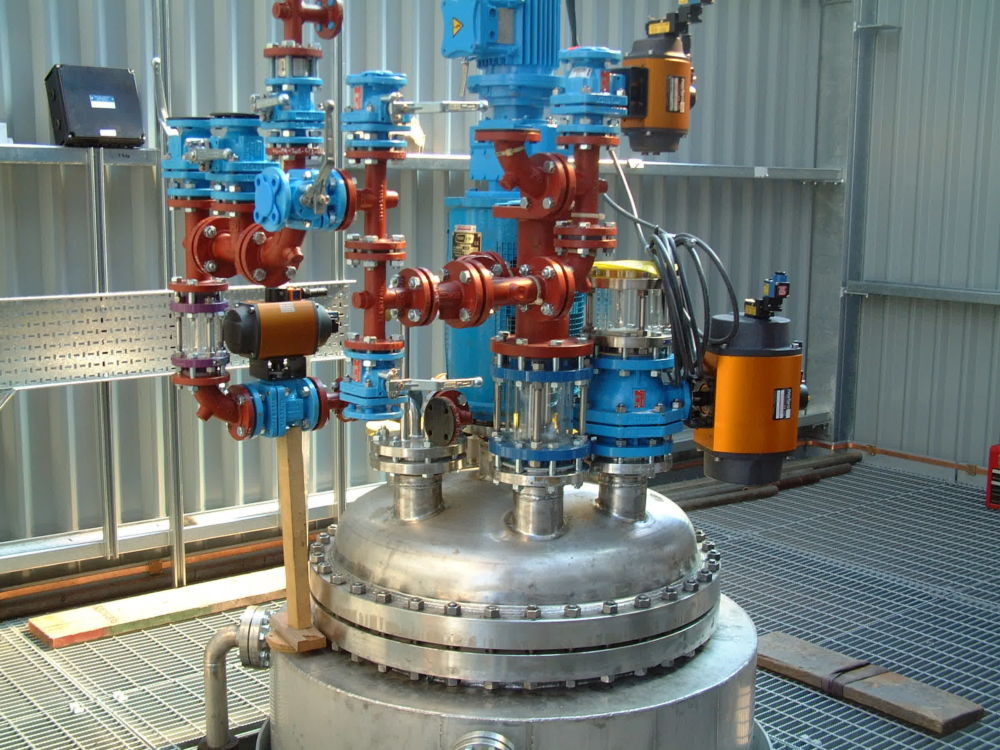
Lined Valves & Reactor Vessel System
Source: crp.co.uk
Amid drastic turbulence in the global lithium battery supply chain, Zimbabwe’s lithium export ban has acted as a bombshell, triggering the global lithium cycle ahead of schedule. In February 2026, Zimbabwe suddenly announced an immediate suspension of lithium concentrate exports, taking effect nearly one year earlier than originally planned. This tough policy has not only reshaped Africa’s lithium resource landscape but also directly given rise to Africa’s first lithium sulfate plant — the Prospect Lithium Zimbabwe project under Zhejiang Huayou Cobalt.
In the leapfrog transformation from “raw material sales” to local processing and value addition, this landmark plant with an investment of USD 400 million has become a model for Chinese enterprises’ industrial chain layout in Africa’s lithium sector. Behind its operation, corrosion-resistant pipes, flanges, pipe fittings and special valve systems are shouldering core responsibilities to cope with extreme working conditions involving concentrated sulfuric acid, high-temperature slurry and other harsh media.
Zimbabwe Lithium Export Ban: Accelerating the Restructuring of the Global Lithium Industrial Chain
On February 25, 2026, Zimbabwe’s Ministry of Mines declared an immediate and indefinite suspension of exports of all lithium ore and spodumene concentrate, affecting even goods already in transit. The ban came into force almost one year ahead of the originally scheduled full ban in January 2027.
The government explicitly pointed out that some mining enterprises were involved in irregular operations, output underreporting, mineral leakage, and the “rush to export” via accelerated mining. For a long time, Zimbabwe’s lithium concentrate export prices have been about USD 1,000 per ton lower than Australian market prices, resulting in severe undervaluation of resource value. The ban aims to force enterprises to conduct local processing and upgrade industrial chain added value.
Latest Policy Evolution & May 2026 Progress (As of May 5, 2026)
From April 2 to 8, the government partially lifted the ban and launched an export quota system. Eligible enterprises must meet stringent requirements:
Publish annual financial statements
Strictly comply with labor, safety and environmental protection standards
Submit a written commitment with a clear timetable for completing the construction of lithium sulfate processing plants by January 1, 2027
Continue paying a 10% export tax until the full ban takes effect
Quotas will be notified individually to compliant producers, benefiting primarily Chinese enterprises that already have local processing capacity or pledged investment. This policy package is accelerating the transformation of Africa’s lithium resources from raw material export to midstream processing.
Huayou Cobalt’s First African Lithium Sulfate Plant: A Milestone in Local Processing
Owner & Investor: Prospect Lithium Zimbabwe (PLZ), a wholly-owned subsidiary of Zhejiang Huayou Cobalt.
Location: Goromonzi area of Zimbabwe, approximately 80 kilometers southeast of Harare, adjacent to the Arcadia Lithium Mine.
Total Investment: About USD 400 million (cumulative investment of the entire Arcadia project exceeds USD 1 billion).
Annual Capacity: 50,000 tons of lithium sulfate, ranking first in Africa and leading globally in scale.
The project entered trial production in Q1 2026 and shipped Africa’s first batch of lithium sulfate products on April 28, 2026, marking Zimbabwe’s official entry into the era of local lithium salt processing.
The plant directly converts lithium concentrate produced from the Arcadia Mine into intermediate battery materials, which can be further refined into lithium hydroxide or lithium carbonate, perfectly bypassing the lithium concentrate export ban.
Engineering Practice of Piping Systems for Lithium Sulfate Plants: Full Analysis of Corrosion-Resistant Solutions
The core processes of lithium sulfate plants are sulfuric acid leaching, purification and crystallization, involving the transportation of highly corrosive slurry with solid particles, concentrated sulfuric acid, high-temperature acidic solutions (low pH, high chloride/sulfate content), and high-temperature media at 80-150°C and above. Piping systems must simultaneously meet strict requirements for corrosion resistance, wear resistance, temperature resistance, tightness and cost-effectiveness, standing as a top priority in P&ID design for EPC projects.
Process Challenges & Piping Requirements
Slurry abrasion, strong corrosion of acidic media, and thermal expansion compensation under high temperature and pressure impose extremely high demands on piping materials and connection methods. A typical hybrid solution combining FRP and fluoroplastic-lined systems is adopted to balance performance and cost.
Main Piping Material Selection
FRP/GRP Fiberglass Reinforced Plastic Pipes
Application: Large-diameter slurry transportation (flotation, thickener underflow, tailings/wastewater), low-concentration sulfuric acid/brine, cooling water and process water pipeline networks.
PVDF / PTFE / PFA Lined Steel Pipes
Application: High-corrosion core areas — concentrated sulfuric acid feeding, inlet and outlet pipelines of acid leaching reactors, high-temperature solution pipelines, evaporation, crystallization and solvent extraction lines.
Structure: Carbon steel/stainless steel outer pipe lined with 2-6mm thick fluoroplastic (flared or loose-lined), flange connection design, integrating the mechanical strength of metal with the excellent corrosion resistance of fluoroplastics.
Stainless Steel & Alloy Pipes
Grades: 316L, 2205 Duplex Stainless Steel, Alloy 20, Hastelloy C-276.
Application: Steam pipelines, chemical dosing, product solution transfer and other low-corrosion zones.
Note: Lining combination is required in slurry service to prevent abrasion damage.
Flanges, Pipe Fittings & Connection Systems
Flanges: ASME B16.5 Class 150/300, PTFE/PFA clad or fully lined flanges (raised face/flat face), matched with PTFE/expanded PTFE gaskets. Van Stone lap joint flanges are widely used for easy on-site installation and maintenance.
Pipe Fittings: 90°/45° long-radius elbows (to reduce abrasion), concentric/eccentric reducers, tees, expansion joints (for thermal expansion absorption), Y-strainers and spectacle blinds.
Key Features: Full-lined design; slurry service fittings adopt thickened wall or polyurethane/ceramic wear-resistant lining to ensure zero leakage.
Valve Types & Core Applications
Knife Gate Valves: For slurry isolation, thickener underflow and tailings lines (wear-resistant lined design with polyurethane/ceramic seats).
Ball Valves: PFA/PTFE fully lined type for precise flow control (full bore or V-port ball).
Butterfly Valves: For large-diameter low-pressure slurry and water pipelines.
Pinch Valves: Ideal for highly abrasive slurry with outstanding zero-leakage performance.
Others: Check valves, diaphragm valves and safety valves. Electric/pneumatic actuators are equipped at critical control points to realize automatic operation.
As a typical Chinese-invested EPC project, the piping system of Huayou’s Arcadia project is led by Huayou’s in-house engineering team or Chinese EPC general contractors, prioritizing mature domestic supply chains including China Nuclear Su Valve and lining pipe manufacturers in Zhejiang and Jiangsu. The overall solution adopts the model of FRP for large-diameter non-extreme service + fluoroplastic-lined pipes for critical process lines, complying with local construction requirements while ensuring long-term reliable operation, and significantly reducing maintenance costs and shutdown risks.
Zimbabwe’s lithium export ban and the successful commissioning of Huayou Cobalt’s African lithium sulfate plant mark the accelerated shift of the global lithium industrial chain from raw material export to local processing and value addition.
This transition has not only pushed up short-term lithium prices but also opened up enormous market space for pipe, flange, pipe fitting and valve manufacturers. In the future, more lithium processing projects will emerge across Africa and Latin America, driving a substantial surge in demand for corrosion-resistant fluid control technologies, especially FRP pipelines, PTFE-lined pipes and special valves.
Leave a Reply